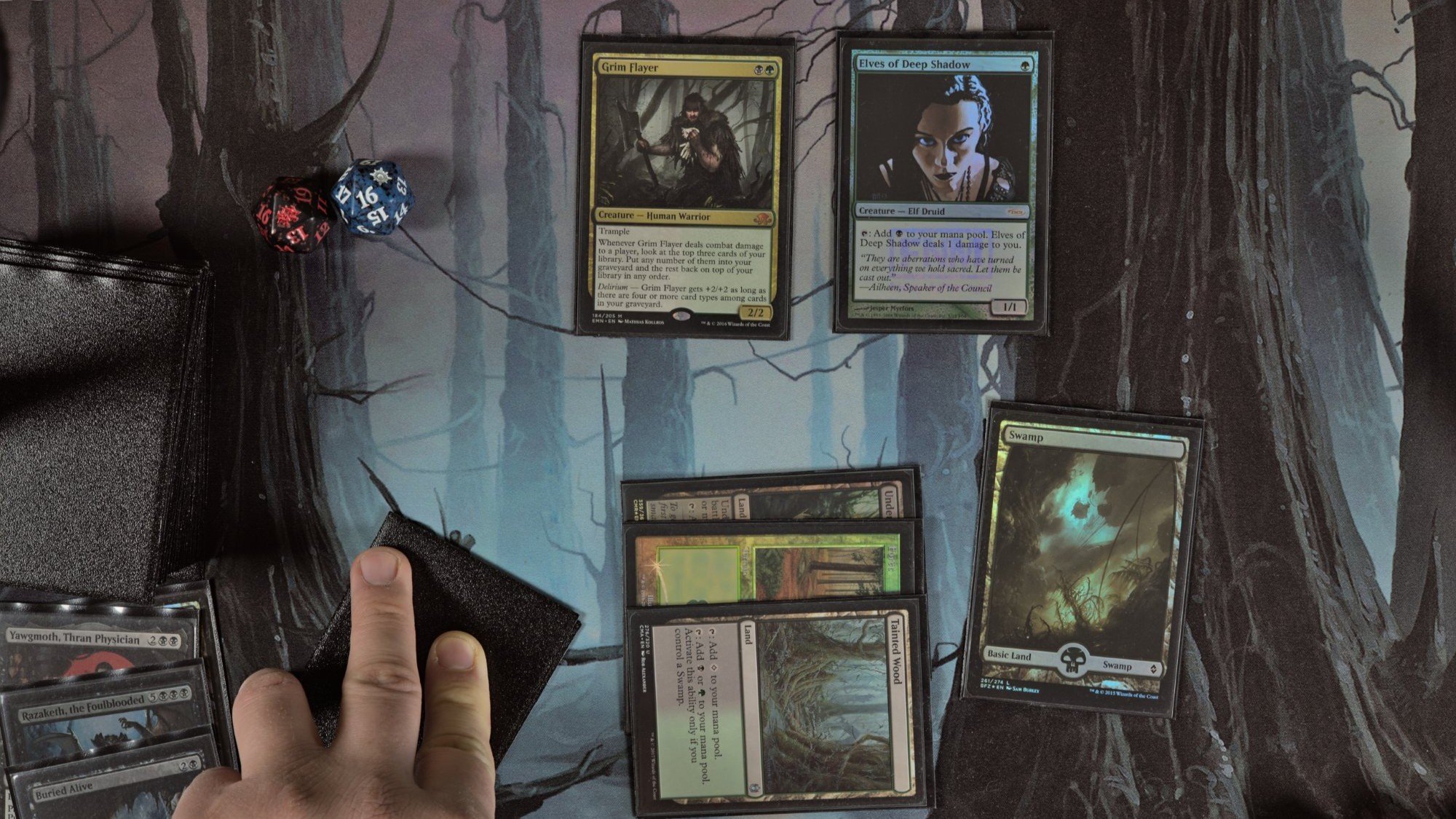
How Many MTG Proxies Should You Order is one of those questions that sounds simple until you realize you are about to create either (a) one nice deck you actually play, or (b) a cardboard avalanche you swear you will “totally sort later.” Let’s pick the option where you still have table space.
Quick note up front: proxies are for casual play and playtesting. If you’re heading to a sanctioned event, you generally need authentic cards, with very narrow exceptions that involve a judge issuing a proxy for a card damaged during that specific event. In other words, don’t bring your home-printed “Totally Real Mana Crypt” and act surprised when reality shows up.
The three order sizes (and what they’re actually for)
1 deck: “i just want to play my list”
This is the cleanest version of proxy life: you have one decklist you care about, you want it in sleeves, and you want to stop goldfishing with basic lands labeled “this is a dual land, trust me.”
Typical counts
- Commander: 100 cards (99 + commander), plus whatever tokens you like.
- 60-card formats: 60 main + up to 15 sideboard (if you’re doing sideboards), plus tokens.
When 1 deck is the right call
- You’re testing a new Commander build for consistency.
- You’re trying a Modern or Pioneer deck before buying into it.
- You’re upgrading one deck and want to see if the “new plan” is real or just late-night optimism.
The trap
You order exactly 100 cards, then realize you want:
- Tokens you forgot
- A different commander version
- A swapped land package
- One extra card because you miscounted and now you’re mad at math
Practical fix
Add a small buffer. Even 5 to 10 extra slots can save you from reordering because you changed your mind about one removal spell (which you will).
If you’re starting from scratch, it helps to have a workflow. This pairs well with: MTG Proxy Deck Testing Workflow: From Decklist to Shuffled Sleeves with Minimal Suffering
5 decks: “my group needs options” or “i have a brewing problem”
Five decks is where proxy ordering stops being “one list” and becomes “a small collection that needs adult supervision.”
When 5 decks is the right call
- You want a mini gauntlet of decks for your own testing.
- You host Commander nights and want loaner decks.
- You’re building a “power range” set (precon-ish, upgraded, optimized, etc.).
- You want to test multiple archetypes without buying duplicates of expensive staples.
The big decision: duplicates vs swapping
With real cards, people swap staples between decks because nobody owns eight copies of the same premium land suite. With proxies, you get to choose:
- Duplicate staples across decks (recommended if you value your time and sanity)
Each deck stays sleeved and ready. You don’t do the “where did my Sol Ring go” scavenger hunt. - Build a shared staples pool (recommended if you enjoy spreadsheets and mild suffering)
You proxy one copy of each staple and move them between decks.
In my opinion, the “shared staples pool” is only worth it if you genuinely like the process. Otherwise it turns deck night into inventory night.
Rule of thumb
If you want five decks that are always ready to play, you’ll order full counts per deck, including duplicates. That means 500 Commander cards (5 x 100) plus tokens.
A full gauntlet: “i’m testing like i mean it”
A “gauntlet” is a set of decks you test against repeatedly to learn matchups, tune lists, and figure out whether your deck loses to removal or just loses to you keeping bad hands.
When a full gauntlet is the right call
- You play cEDH or high-power Commander and want to keep up with changes.
- You test competitive 60-card formats and need real matchup reps.
- You have a regular playgroup that rotates decks and wants variety.
- You want to evaluate power bands (especially useful now that Commander power conversations have become… an entire genre).
How big is “full”?
Common gauntlets are 8 to 12 decks. Bigger than that is possible, but at some point you’re running a library, not a game night.
For Commander:
- 8 decks: 800 cards (+ tokens)
- 10 decks: 1,000 cards (+ tokens)
- 12 decks: 1,200 cards (+ tokens)
That’s also the point where organization stops being optional. More on that in the next article, because the “pile method” is how decks become soup.
Quick comparison table
| Order size | Commander card count | Best for | What usually goes wrong |
|---|---|---|---|
| 1 deck | 100 (plus tokens) | One list, fast testing | No buffer for changes |
| 5 decks | ~500 | Playgroup variety, mini gauntlet | Staple duplicates vs swapping drama |
| Full gauntlet (8 to 12) | 800 to 1,200 | Serious testing, matchup reps | Mix-ups, missing labels, chaos |
The simple math that prevents dumb reorders
Here’s the “don’t make me pay shipping twice” checklist.
For each deck, count:
- Main deck cards (60 or 100)
- Sideboard (0 to 15)
- Commander(s) and companion (if relevant)
- Tokens and emblems you actually use
- Any “maybe board” swaps you expect to try soon (5 to 15 cards is common)
Then decide if you want duplicates of shared staples
This is the hinge point for bulk ordering.
If you’re building five decks that all run the same mana rocks and lands, you either:
- Order duplicates and keep decks intact, or
- Order one “staples set” and accept that you’ll be moving cards
If you want a primer on where most tables draw the proxy line, and what “casual use” usually means, this is helpful background: MTG Proxies 101: What proxies are, why people use them, and where the line usually is
So… How Many MTG Proxies Should You Order?
How Many MTG Proxies Should You Order comes down to two questions:
- Do you want one deck you’ll tune, or multiple decks you’ll rotate?
- Do you want to play immediately, or do you want to manage a shared staples pool?
If you want the lowest-friction answer:
- Order 1 deck if you’re testing one list.
- Order 5 decks if you want variety or loaners.
- Order an 8 to 12 deck gauntlet if you’re doing real matchup work and you’ll actually use it.
And yes, i’m implying you should be honest with yourself about whether you will “actually use it.” Cardboard has a long history of becoming decor.
Ordering checklist (copy-paste friendly)
- Finalize decklists (even if you expect tweaks)
- Add a buffer for likely swaps
- Decide duplicates vs shared staples
- Include tokens you use
- Pick a naming convention for decks (you will need it later)
- Plan how you will organize decks when they arrive